Ceramic Coating in Bolton, Greater Manchester
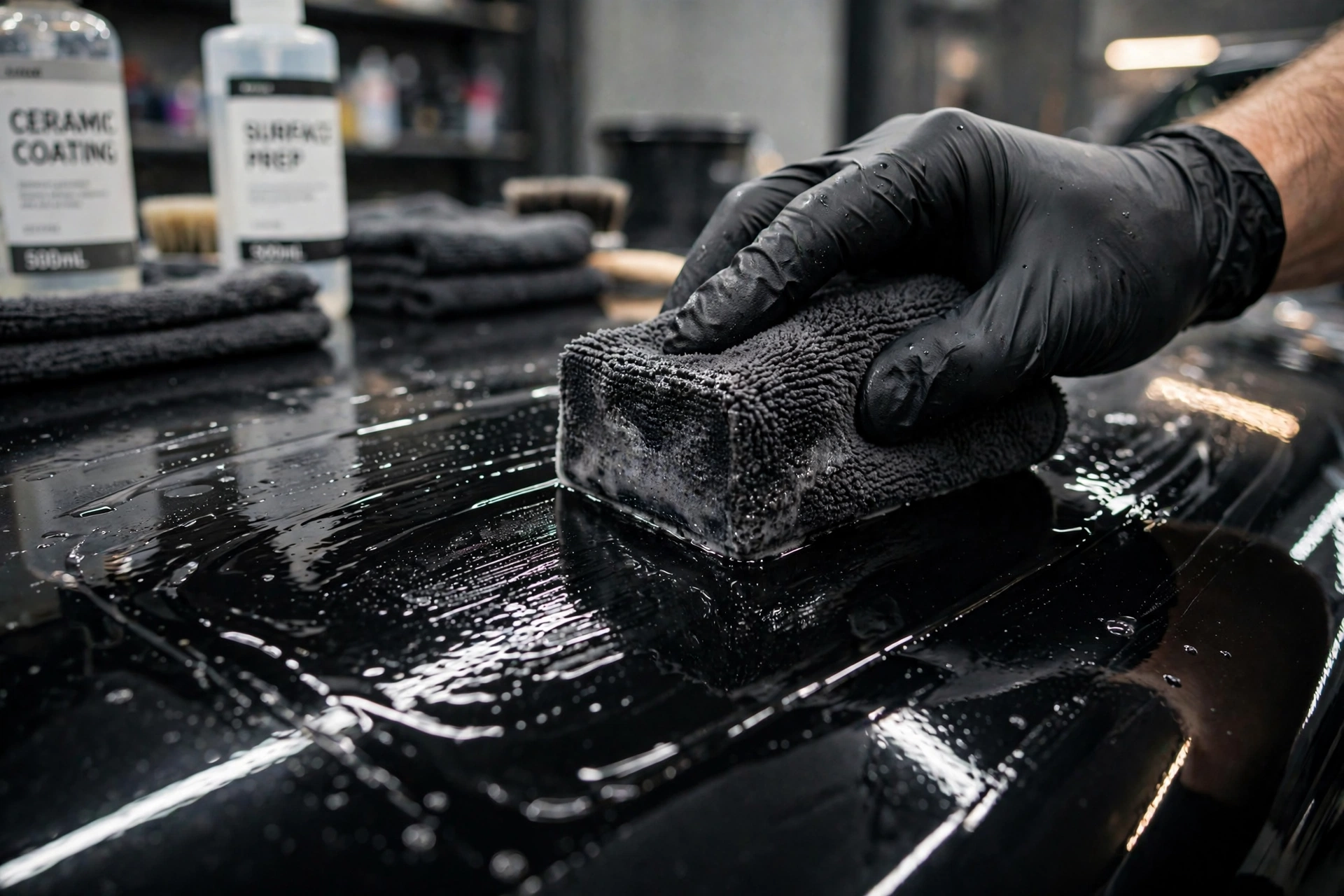
Ceramic coating is a liquid polymer that chemically bonds to your car's paintwork, forming a durable protective layer. It shields against UV rays, road grime, bird lime and winter salt while adding deep gloss and hydrophobic water-beading. For Bolton drivers, it means easier washes, longer-lasting shine, and paint that stands up to Pennine weather year-round.
Key facts
- Durability
- A well-applied professional coating on properly corrected paint can protect for several years.
- Preparation
- Multi-stage decontamination wash, clay bar treatment and machine polishing before application.
- Aftercare
- Wash with pH-neutral shampoo using the two-bucket method; avoid automatic brush car washes.
- Process
- 6-step application process, from consultation and inspection to curing and aftercare handover.
Ceramic coating has become the gold standard of paint protection for drivers across Bolton and Greater Manchester. Unlike a wax that washes away within weeks, a ceramic coating chemically bonds with your car's clear coat to form a hard, glass-like layer that lasts for years. The result is deeper gloss, intense water beading, and paintwork that shrugs off the grime of the M61 commute and Pennine rain.
Every coating we apply starts with meticulous preparation — a thorough decontamination wash, clay bar treatment and machine polish — because a coating only looks as good as the paint beneath it. Whether your car is a daily driver parked on a driveway in Heaton or a weekend car garaged near Rivington, professional ceramic coating keeps it looking freshly detailed with far less effort. Call or WhatsApp +44 7375 759686 for a free quote, any time — we're open 24 hours, 7 days a week.
What Ceramic Coating Is (and What It Isn't)
A ceramic coating is a liquid polymer — usually silicon dioxide (SiO2) based — that is applied by hand and cures to form a semi-permanent chemical bond with your vehicle's factory paint. Once cured, it becomes a hardened protective layer measured in microns, far tougher and longer-lasting than any wax or sealant. It does not make paint scratch-proof, and it does not replace washing — but it makes contamination far less likely to stick and far easier to remove.
Think of it as a sacrificial shield. UV rays, bird lime, tree sap, road tar and winter gritting salt attack the coating first, not your clear coat. Because the surface is intensely hydrophobic, water sheets and beads off, carrying loose dirt with it — which is why coated cars stay cleaner between washes and need less aggressive cleaning to look their best.
Why Bolton Drivers Choose Ceramic Coating
Greater Manchester weather is hard on paintwork. Between frequent Pennine rain, winter road salt, motorway film from the M61 and stone chips kicked up on the A666, an unprotected car picks up damage fast. Ceramic coating gives Bolton drivers a practical, year-round defence that keeps working through every season — not just the week after it's applied.
- Hydrophobic water beading that makes rain roll straight off the panels
- UV protection that slows fading and oxidation on sun-exposed paint
- Chemical resistance against bird lime, tree sap, tar and road salt
- A deep, glossy finish that looks freshly detailed for years
- Easier, safer washes with less scrubbing and fewer swirl marks
Ceramic Coating vs Wax vs Paint Sealant
Carnauba wax gives a warm glow but typically lasts six to twelve weeks before it needs reapplying. Synthetic paint sealants last a little longer — around three to six months. A professional ceramic coating, properly applied and maintained, protects for two to five years or more. The upfront investment is higher, but the cost per month of protection is usually far lower.
There is also a difference in how they protect. Waxes and sealants sit on the surface; ceramic coatings bond to it. That chemical bond is what gives coatings their hardness, chemical resistance and hydrophobic behaviour — qualities a wax simply cannot match, especially through a wet Greater Manchester winter.
How Long Ceramic Coating Lasts and How to Look After It
Durability depends on the coating tier, the preparation beneath it, and how the car is maintained. A well-applied professional coating on properly corrected paint can protect for several years. Maintenance is simple: wash regularly with a pH-neutral shampoo, use the two-bucket method, avoid automatic brush car washes, and dry with a clean microfibre towel or air dryer.
Topping up with a compatible spray sealant every few months helps maintain peak hydrophobics. We explain the full aftercare routine when we hand your car back, so you know exactly how to keep the coating performing at its best for years to come.
Our Ceramic Coating Process in Bolton
A great coating is 90% preparation. Here is the step-by-step process behind every ceramic coating we apply.
- 1
Consultation and inspection
We start by discussing what you want from the coating — daily-driver protection, show-car gloss, or something in between — and inspect your paintwork under proper lighting. This tells us exactly what level of preparation your car needs before any coating touches it.
- 2
Decontamination wash
Your car gets a thorough multi-stage wash including snow foam, iron fallout remover and tar remover to strip bonded contamination from the paint, wheels and glass. A coating can only bond to clean paint, so this stage is never rushed.
- 3
Clay bar treatment
We clay every painted panel to remove embedded particles the wash can't shift, leaving the surface glass-smooth to the touch. This step is essential — coating over contaminated paint traps defects underneath and weakens the bond.
- 4
Machine polishing
Swirl marks, haze and light scratches are machine polished out, with paint depth checked by gauge for safety. The coating locks in whatever finish is underneath, so this correction stage is what creates that flawless, mirror-like gloss.
- 5
Panel wipe and coating application
Panels are wiped down with an isopropyl panel wipe to remove polishing oils, then the ceramic coating is applied panel by panel in a controlled environment. Each section is carefully levelled to avoid high spots before the coating begins to cure.
- 6
Curing and aftercare handover
The coating needs time to cure before it gets wet, so we advise on the curing window and hand over a simple aftercare routine. Follow it, and your coating will bead water and turn heads for years.
Trusted further reading
- Autoglym — What is ceramic coating? — Manufacturer explainer
- RAC — Ceramic coating guide — Independent UK motoring advice
Serving Bolton & Greater Manchester
We're based in Bolton and coat cars across Greater Manchester — from daily drivers commuting down the M61 to weekend cars in Horwich, Westhoughton and Bromley Cross. Pennine weather means your paint faces rain, road film and winter gritting salt for much of the year, and a ceramic coating is the most practical year-round defence. Whether you park on a driveway in Heaton or on the street near Bolton town centre, we tailor the preparation and coating to how your car is actually used.
Areas we serve
BoltonHorwichFarnworthKearsleyLittle LeverWesthoughtonBlackrodAdlingtonBuryRadcliffeRamsbottomTottington
View all areas covered →Frequently asked questions
How long does ceramic coating last on a car?
Is ceramic coating worth it for a daily-driven car?
Does ceramic coating prevent scratches and stone chips?
Can I get ceramic coating applied in winter?
Does my car need paint correction before ceramic coating?
Get your free, no-obligation quote
Tell us about your car and what it needs. We'll reply with an exact price and the earliest available slot.
Open 24 hours, 7 days a week — call or message any time.