Paint Correction Before Ceramic Coating: Why It Matters
By Ceramic Coating Bolton · Published 2026-10-14 · Ceramic coating guides
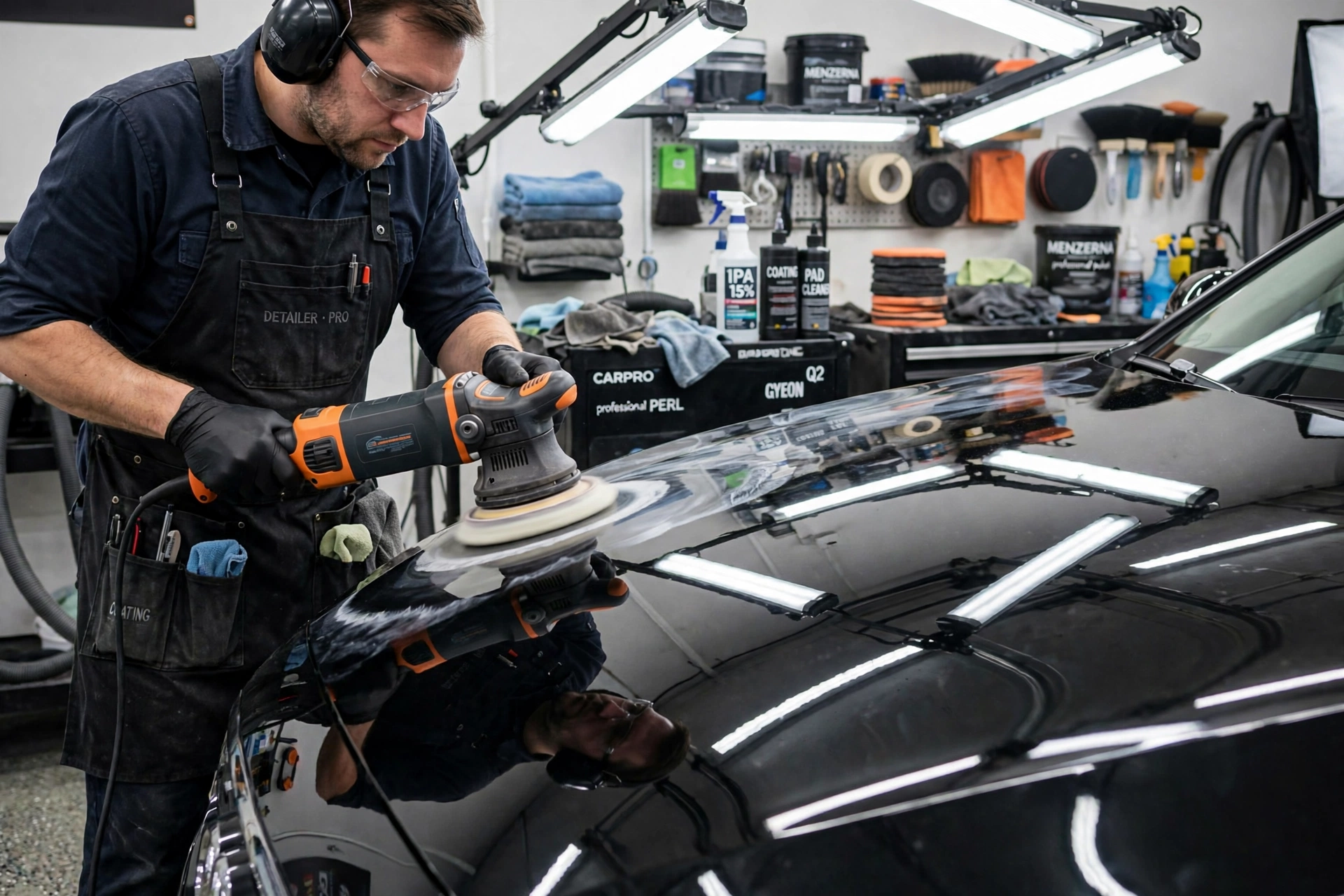
Paint correction — machine polishing to remove swirl marks, light scratches, and oxidation — is essential before ceramic coating because the coating locks in whatever finish is underneath and bonds best to clean, level clear coat. Skipping it seals defects in for years with weaker adhesion. It is the most labour-intensive part of a coating job.
Here's the uncomfortable truth behind most disappointing ceramic coatings: the coating itself was fine — the preparation wasn't. A ceramic coating is transparent and semi-permanent, which means every swirl mark, hologram, and patch of dullness underneath it gets preserved like an insect in amber, visible for the entire life of the coating. Understanding this changes how you judge every quote you receive.
Paint correction is the machine-polishing process that fixes this. It levels the clear coat, removes defects, and creates the flawless, contaminant-free surface a coating needs to bond properly. This guide explains what correction involves, why it's non-negotiable, and how to tell whether a detailer's preparation is up to scratch. Get the preparation right and the coating delivers everything promised; get it wrong and nothing else matters.
What Paint Correction Actually Involves
Paint correction is machine polishing with progressively finer abrasive compounds to remove a microscopic layer of damaged clear coat, levelling out swirl marks, light scratches, hazing, and oxidation. It typically follows a thorough wash, iron and tar decontamination, and clay treatment. A single-stage correction (one polishing step) removes light defects and restores gloss; a two-stage correction (cutting then refining) tackles heavier swirling. Each stage is hours of skilled, panel-by-panel work.
Why Coating Over Defects Is a Disaster
Three problems arise when coating goes over uncorrected paint. First, aesthetics: the coating's glassy finish actually makes underlying swirls more visible, not less, because the sharper reflections highlight every defect. Second, durability: bonded contamination and uneven clear coat give the coating a poor surface to grip, shortening its life. Third, permanence: once cured, the coating must be polished off to fix anything underneath — you're paying twice for the same work.
- Swirls and holograms become more visible under the coating's sharp gloss
- Contamination and uneven paint weaken the chemical bond, shortening coating life
- Fixing defects later means polishing the coating off and starting again
- Even brand-new cars need at least light correction — dealership prep causes swirls
How Much Correction Does Your Car Need?
It depends on the paint's condition, which is why reputable detailers inspect the car under proper lighting before quoting. A new or well-kept car often needs only a single-stage enhancement polish. A daily driver with years of brush washes and automatic car washes usually needs two stages. Heavily neglected paint may need more — or may be too thin to correct safely, which a paint-depth gauge reading will reveal. There is no honest one-size-fits-all answer.
Questions to Ask Your Detailer
How many correction stages are included in the quote? Will you measure paint depth before polishing? What does the decontamination process involve? Can I see the paint under inspection lighting before and after correction? A detailer who welcomes these questions and shows you the work is one who takes preparation seriously. One who gets vague or defensive about the polishing stage is telling you everything you need to know.
The Full Pre-Coating Preparation Process
This is the sequence a thorough professional follows before a single drop of coating touches the paint:
- 1
Wash and decontamination
A meticulous two-bucket wash removes loose dirt, followed by iron fallout remover, tar remover, and clay bar treatment to strip bonded contaminants from the clear coat.
- 2
Paint inspection
The paintwork is examined under high-intensity inspection lighting and paint depth is measured panel by panel, revealing swirls, scratches, and thin areas before any machine polishing begins.
- 3
Machine polishing
One or more stages of machine polishing with diminishing abrasives level the clear coat, removing defects and restoring deep gloss and clarity across every panel of the vehicle.
- 4
Panel wipe
An isopropyl alcohol or dedicated panel-wipe solution strips all polishing oils, leaving surgically clean paint for maximum coating adhesion, so the coating bonds directly to bare clear coat.
- 5
Coating application
The ceramic coating is applied panel by panel in controlled conditions, levelled carefully, and inspected for high spots before curing begins, to ensure a flawless, even finish.
Frequently asked questions
Can I skip paint correction on a brand-new car?
Does paint correction thin the paint dangerously?
Why does paint correction cost so much?
How do I know if my car needs one or two stages?
Get your free, no-obligation quote
Tell us about your car and what it needs. We'll reply with an exact price and the earliest available slot.
Open 24 hours, 7 days a week — call or message any time.