Does Ceramic Coating Stop Scratches?
By Ceramic Coating Bolton · Published 2026-10-14 · Ceramic coating guides
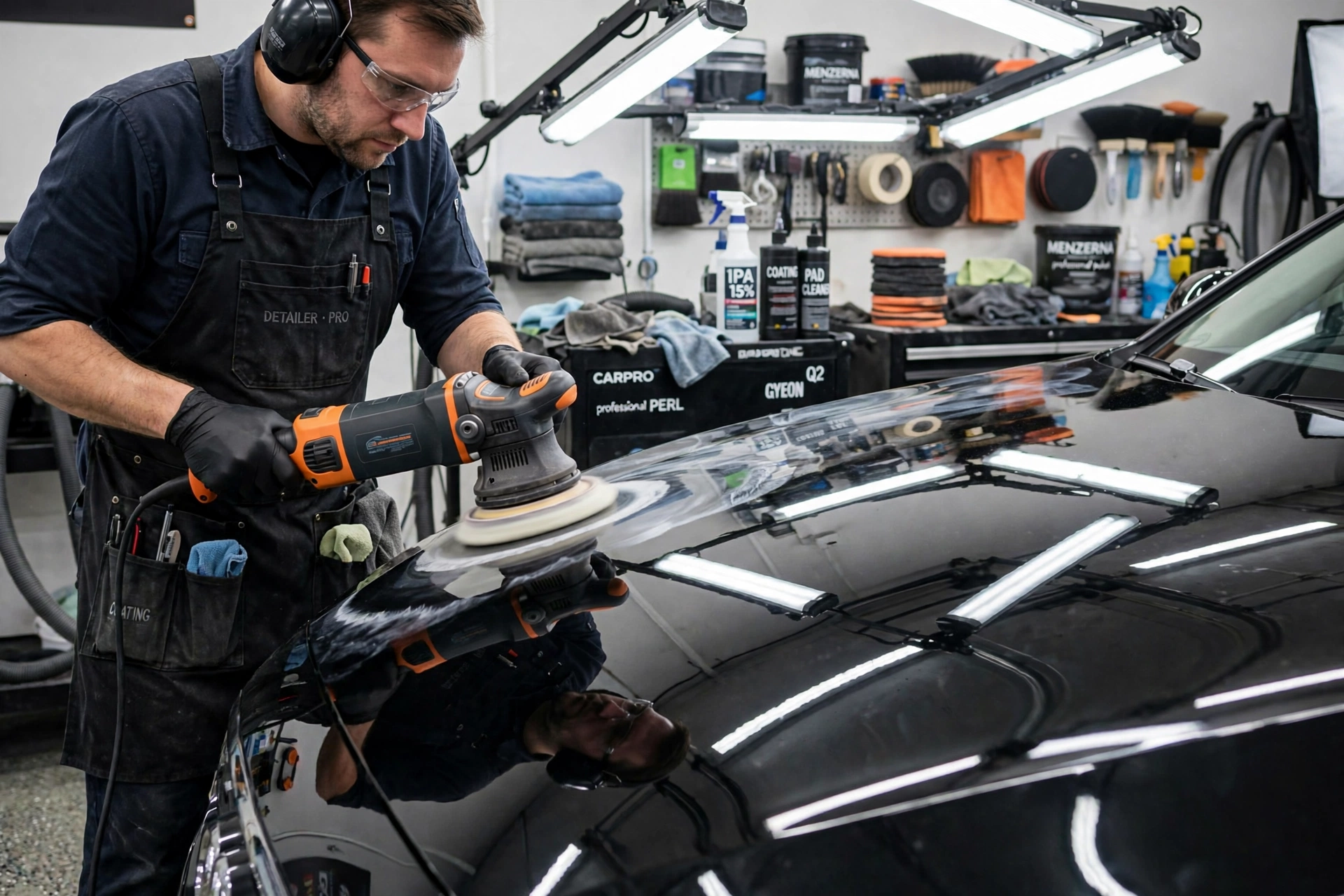
No — ceramic coating does not stop scratches. It adds a hard sacrificial layer that resists light marring and wash-induced swirls, but keys, branches, stone chips, and car-park brushes will still scratch through to the paint. The 'scratch-proof' claim is the industry's most misleading marketing. For genuine scratch and chip protection, paint protection film (PPF) is the correct product.
'Scratch-proof', '9H hardness', 'diamond-strong' — the marketing around ceramic coating scratch resistance is some of the most misleading in car care. The 9H figure refers to a pencil-hardness test, not the Mohs mineral scale, and it describes resistance to light marring under controlled conditions — not real-world keys, grit, and shopping trolleys. Let's separate the laboratory facts from the showroom fiction.
This article busts the myth properly: what a coating's hardness actually means, the specific types of damage it can and can't handle, and what to buy instead if scratch and stone-chip protection is genuinely your priority. No hype, just the physics. By the end, you'll know exactly what a coating resists, what it doesn't, and which product actually stops scratches.
What '9H Hardness' Really Means
The 9H rating comes from the pencil hardness test used in the coatings industry — the coating resists scratching by a 9H pencil under specific lab conditions. It does not mean the coating is as hard as a 9H mineral, and it says nothing about resistance to a key, a stone at 70mph, or a gritty brush. It's a meaningful measure of resistance to fine marring, but marketers have stretched it into an implication of near-invincibility that the test never supported.
What a Coating CAN Resist
The hardened layer genuinely helps against light, everyday insults. Fine wash marring — the micro-scratches caused by careful hand washing — is reduced because the slick, hard surface resists the light abrasion that hazes uncoated clear coat. Light dust wiping, drying towels dragged gently, and general environmental wear leave fewer marks. Think of it as raising the threshold: the small stuff that would have marked bare paint now often doesn't.
- Light wash marring and micro-swirls from careful hand washing
- Fine dust wiping and gentle drying towel contact
- Light brush contact with clothing or soft materials
- General environmental wear that hazes uncoated clear coat over time
What Will Still Scratch Straight Through
Anything with real force or a hard edge defeats the coating's few microns of hardness. Stone chips from motorway driving punch through to primer or metal. Keys, rings, and deliberate vandalism cut through effortlessly. Automatic brush washes with gritty brushes scour both coating and paint. Overhanging branches, shopping trolleys, and car-park pillars don't care about your coating. If your car lives a life exposed to these, a coating alone is not the answer.
- Stone chips from motorway and A-road driving
- Keys, rings, and deliberate scratches or vandalism
- Automatic brush car washes with contaminated brushes
- Branches, trolleys, and car-park pillar scrapes
What Actually Prevents Scratches: PPF
Paint protection film is a thick, self-healing polyurethane film — millimetres where a coating is microns — that genuinely absorbs stone chips and resists scratches, with light marks healing in warmth. It's the correct product for impact protection, and it's why many owners combine the two: PPF on high-impact areas (front bumper, bonnet, mirrors) with ceramic coating over the whole car, including the film. It costs far more than coating alone, but it's the only honest answer to 'how do I stop scratches'.
Frequently asked questions
Will a ceramic coating stop swirl marks from washing?
Is 9H ceramic coating harder than my car's paint?
Can you layer coatings for more scratch protection?
Does a coating at least make scratches less visible?
Get your free, no-obligation quote
Tell us about your car and what it needs. We'll reply with an exact price and the earliest available slot.
Open 24 hours, 7 days a week — call or message any time.